Friendly
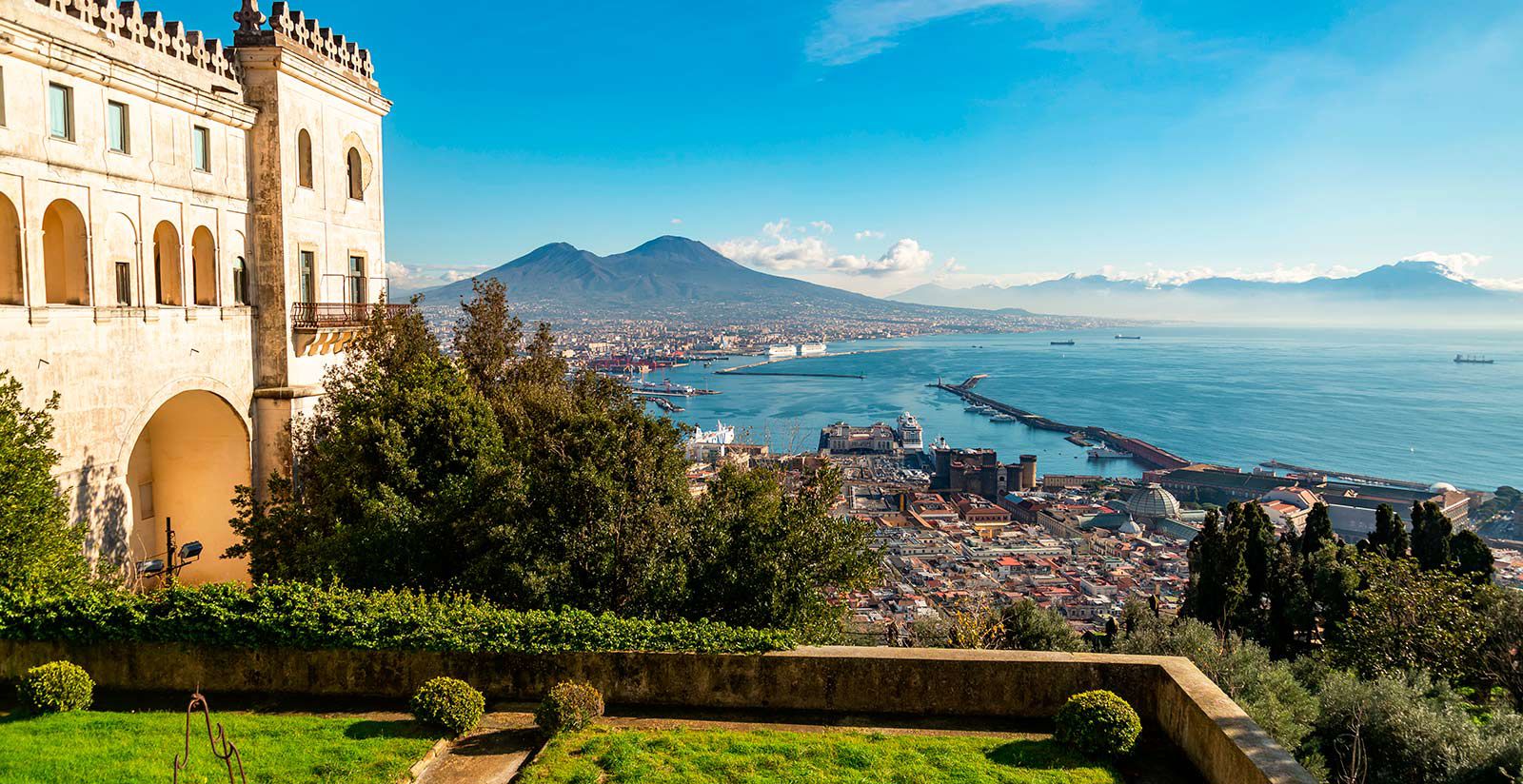
For information and reservations, please contact the front desk.
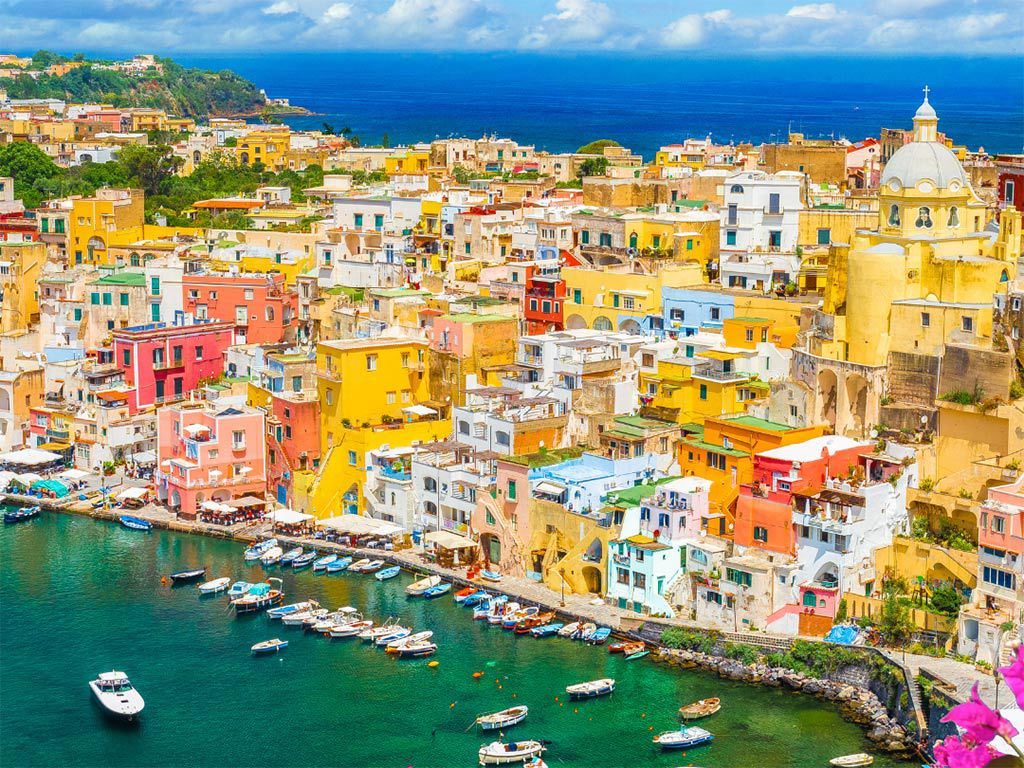
During your stay, treat yourself to a relaxing day discovering the waters of the Gulf of
Naples and its islands. Choose the itinerary you prefer.
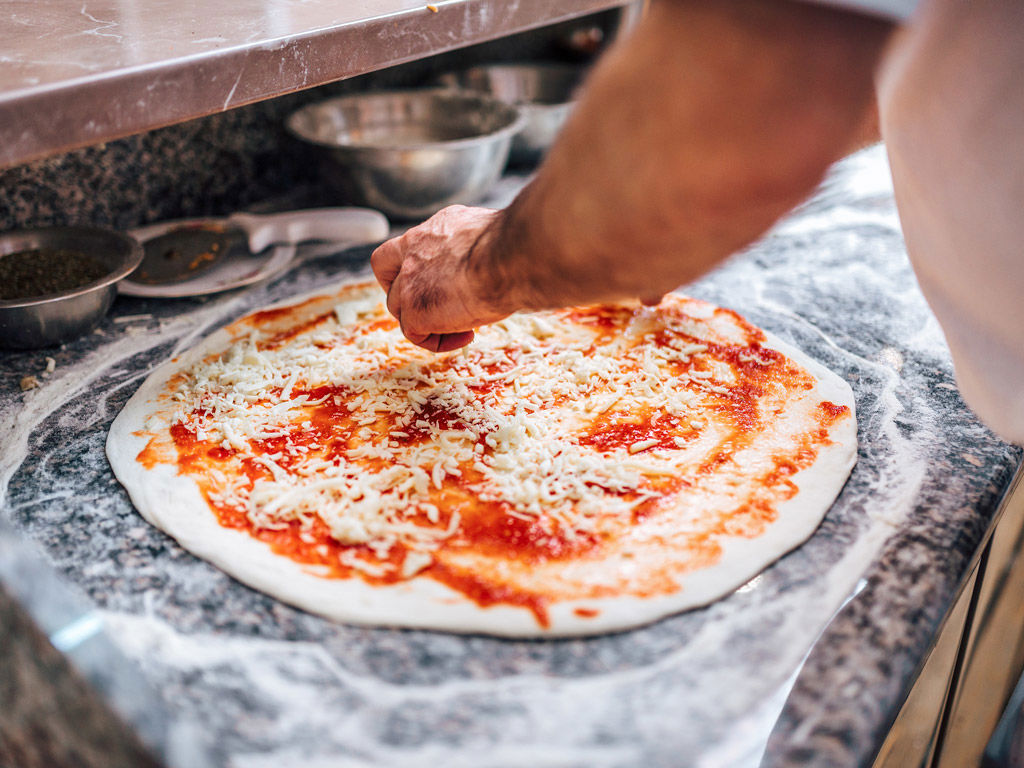
Become a pizza maker for a day with our one-day course on the art of pizza. We offer the possibility of a one-day course in the art of pizza. For more information visit the link below or ask at our reception.
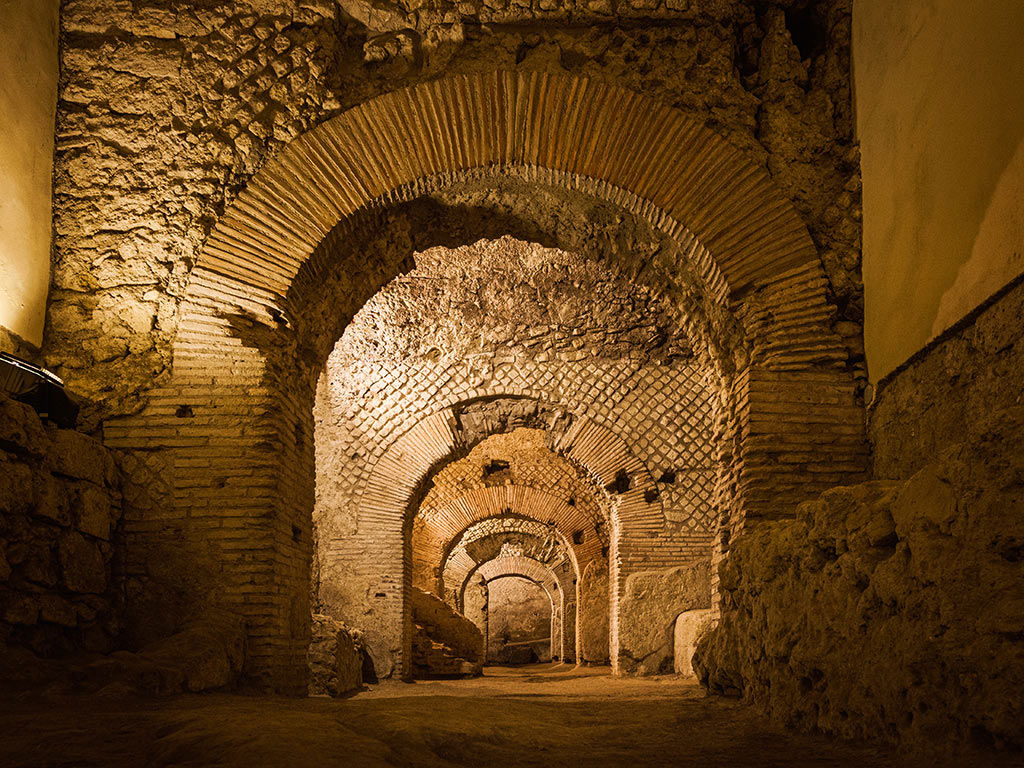
Naples' underground is crisscrossed by a vast network of tunnels, galleries, aqueducts, and spaces excavated and used by man throughout the city's history, from the antient times to the years after the World War II. These underground sites are distinguished from the archaeological finds below ground by their subterranean origins from the time they were created.
Along the route, visitors can visit the Bourbon Tunnel, the Renaissance Aqueduct and Air Raid Shelter of Palazzo Serra di Cassano, the Greco-Roman Aqueduct, the Neapolitan Crypt, the Hellenistic Hypogea of Naples, the Catacombs of Naples, and much more.
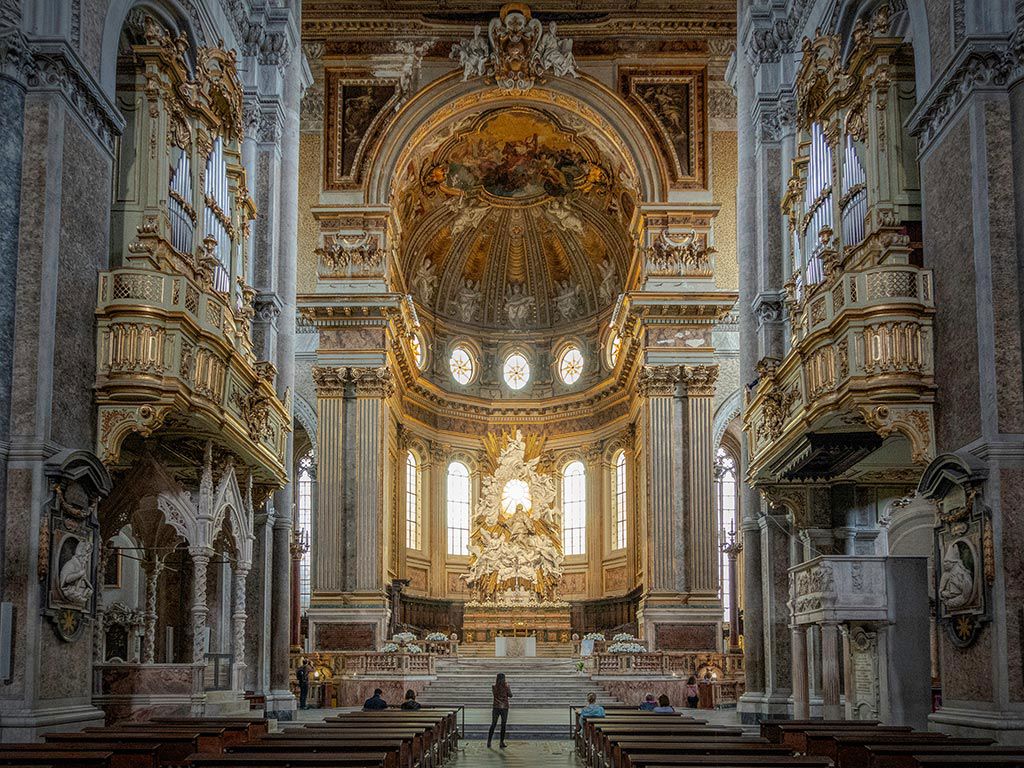
Naples counts many hundreds of churches, chapels, and oratories and, along with Rome, constitutes one of the world's largest cultural heritages. It also represents one of the richest artistic, architectural, civic, and spiritual heritages, formed over seventeen centuries. In the eighteenth century, Naples was known as the city of five hundred domes. In this proposed itinerary, we will focus our attention on five churches in particular: the Church of Santa Chiara, the Church of San Domenico Maggiore, the Church of San Lorenzo Maggiore, the Cathedral, and the Church of San Giovanni a Carbonara. Along the way, we will also stop at the Pio Monte della Misericordia to admire the Seven Works of Mercy by Michelangelo da Caravaggio, the genius of painting who stayed in Naples twice (1606-1607 and 1609-1610).
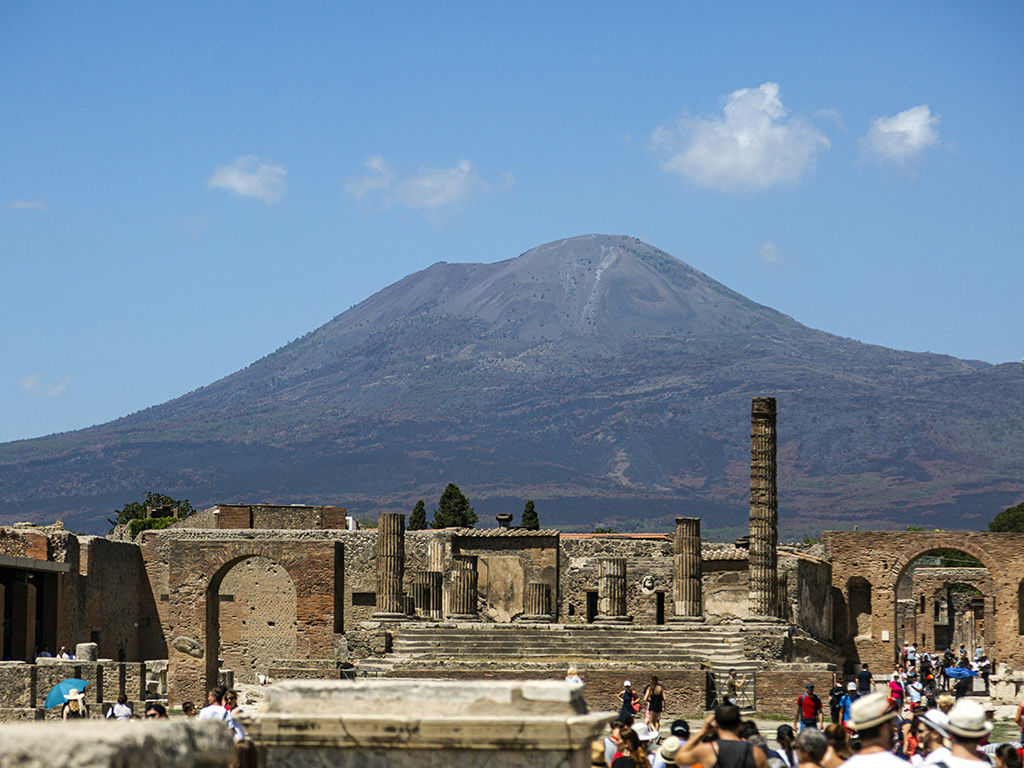
In 79 AD, Mount Vesuvius erupted violently, destroying several cities, including Pompeii, located at the foot of the volcano.
For over 1,500 years, Pompeii remained buried under a layer of volcanic ash. The archaeological excavations began in the mid-18th century and immediately sparked great interest not only in Italy but all over the world.
Many travelers were eager to visit Pompeii, where evidence of the ancient city's sudden demise was literally everywhere. Interest in Pompeii has not waned even today: every year the city is visited by huge numbers of tourists who want to see this "Wonder of the World." And after the tour the "Bosco de’ Medici" winery awaits us for a wine tasting and local culinary offerings.
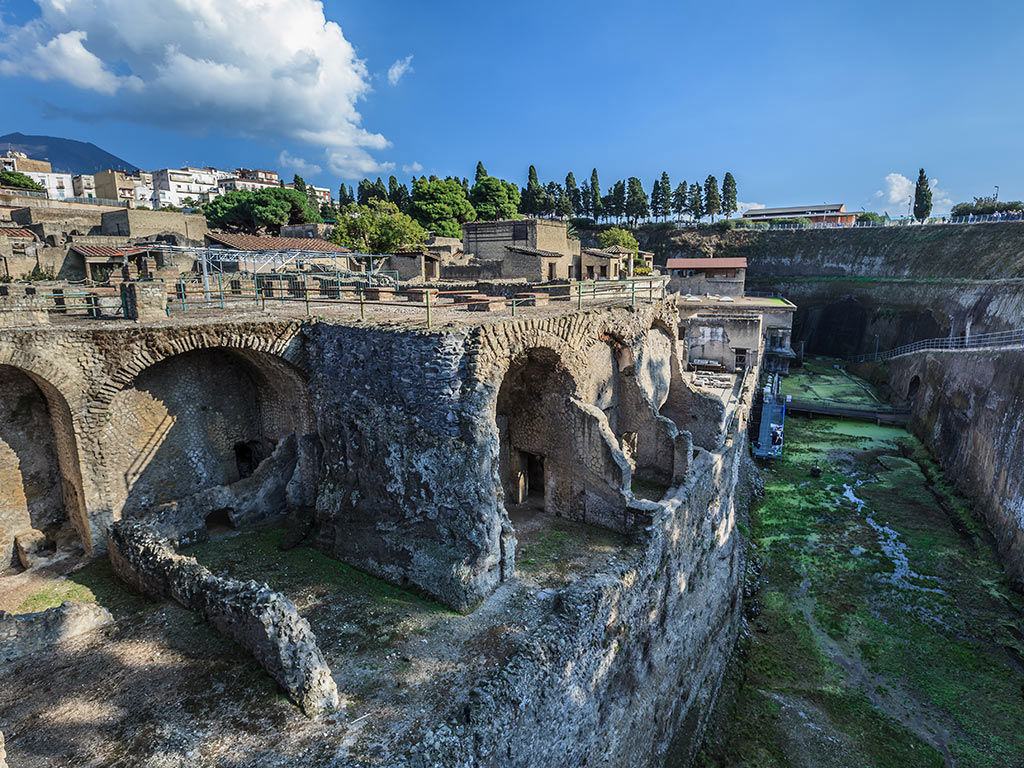
It could be called Pompeii's little sister, though completely different and “more human”, as the great archaeologist Amedeo Maiuri said: "It's almost impossible to list the artistic treasures preserved on this archaeological site: the only way to satisfy your curiosity and thirst for knowledge is to visit it". In addition to priceless monuments, you'll find objects such as beds, wardrobes, and wooden doors, made 2,000 years ago and perfectly protected by a layer of volcanic pyroclastic material about 16 meters thick!
But first, let's go to Vesuvius, the giant that dominates the Gulf of Naples!
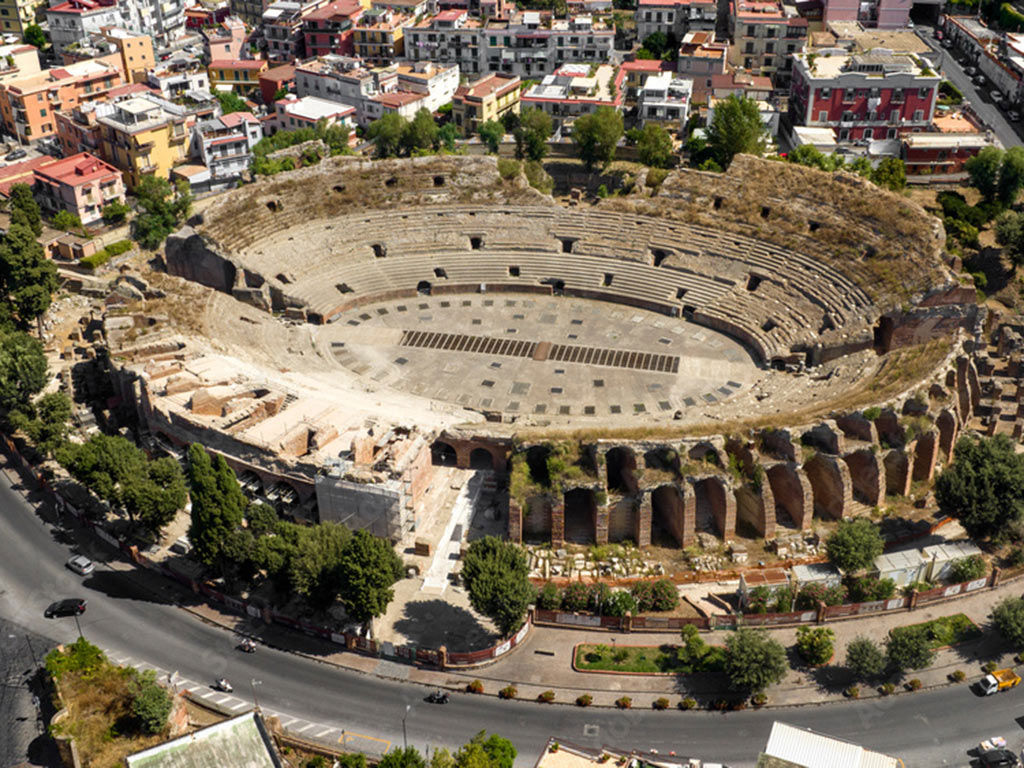
A truly unique and rarely visited route, where charm becomes the defining impression.
Like Sibyl, we will lead you through twenty-five centuries of history, a long journey through timeline with stops in Pozzuoli, Baia, Bacoli, and Cumae.
It will be a trip dotted with monuments of great interest: from the Flavian Amphitheater to the Piscina Mirabile, from Sibyl’s Cave to the Castle of Baia, from the Temple of Venus to the Casina Vanvitelliana.
The excellent restaurant, La Catagna, could be the final part of the tour. They have a menu with freshly caught fish and the magnificent panorama of Capo Miseno and the islands of Procida and Ischia.
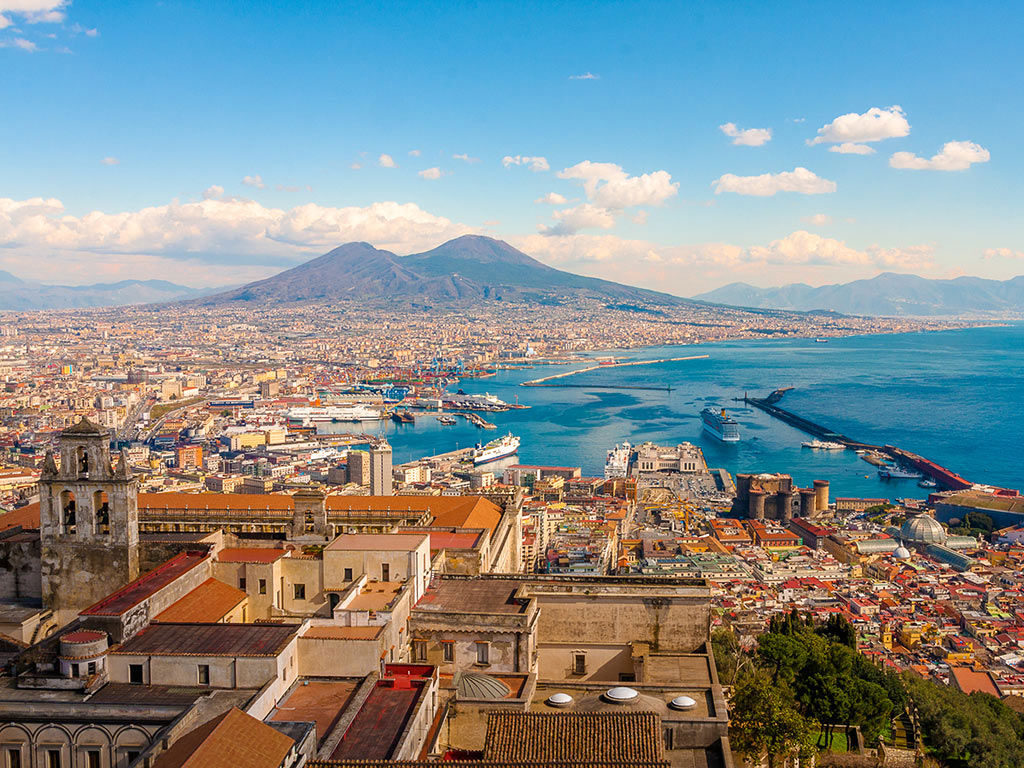
Seen from the sea, Naples appears to the visitor as a big amphitheater rising from below to the hills of Vomero and Posillipo.
This city's layout inspired Edoardo Bennato, an architect by profession and a singer-songwriter by vocation, to design a plan that envisioned a unique road system for what he called the "oblique city," meaning the use of numerous escalators to cover multiple routes from "below" to "above" and vice versa.
This project never came to fruition, but the numerous ancient stairways remain. We will be happy to show you around some of Naples' neighborhoods, almost always away from the traffic and noise!
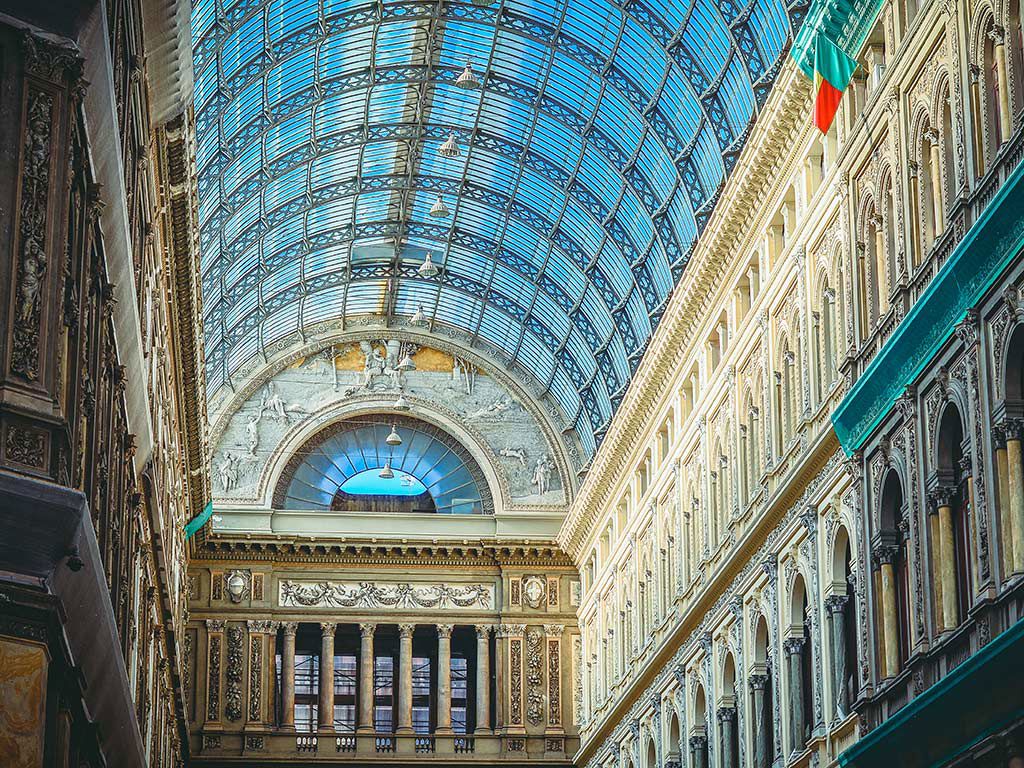
Walking through the Chiaia district is like making a step back in time to the Naples of the late 19th and early 20th centuries, where the scents and traces of the Belle Epoque are still on the streets and Art Nouveau buildings.
Located outside the historic center, the quarter is known as Naples' living room, with its luxury boutiques nestled between Via dei Mille, Piazza dei Martiri, Via Calabritto, and Via Filangieri.
Chiaia is also a district that has retained its pristine charm, far from the chaotic tourist routes, almost resembling a small village sheltered from mass tourism. In addition to the boutiques and many cozy restaurants and cafes, you can admire many beautiful buildings (including Palazzo Mannajuolo, with its monumental elliptical staircase), Villa Pignatelli, and the many narrow streets that lead to the Riviera, Piazza Vittoria, and the seafront.
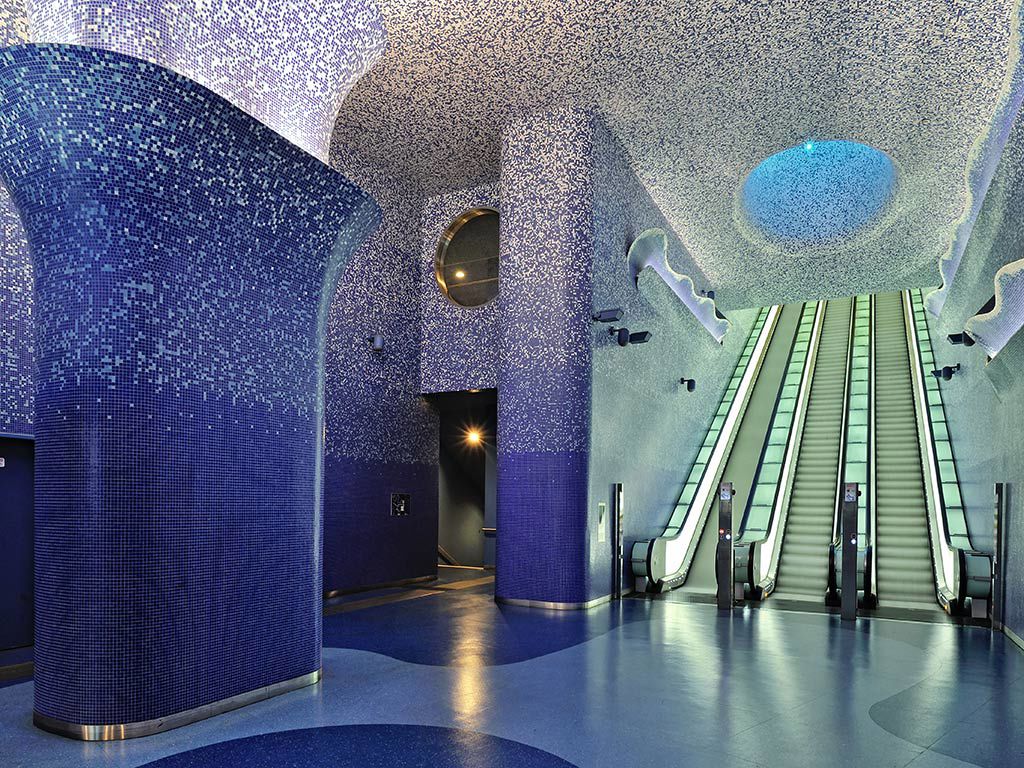
A truly unique way for modern and contemporary art lovers to visit a particular museum is to go through the Naples metro stations.
This extraordinary journey takes in over 300 works by the world's greatest artists, coordinated by the renowned art critic Achille Bonito Oliva: from Anish Kapoor to William Kentridge, from Mimmo Jodice to Jannis Kounellis, from Peter Greenaway to Joseph Kosuth and Michelangelo Pistoletto.
Naples has always been a center of interest for contemporary artists, starting with the numerous visits to the city by Andy Warhol and Joseph Beuys, who left their great works to be admired during this unusual trip.
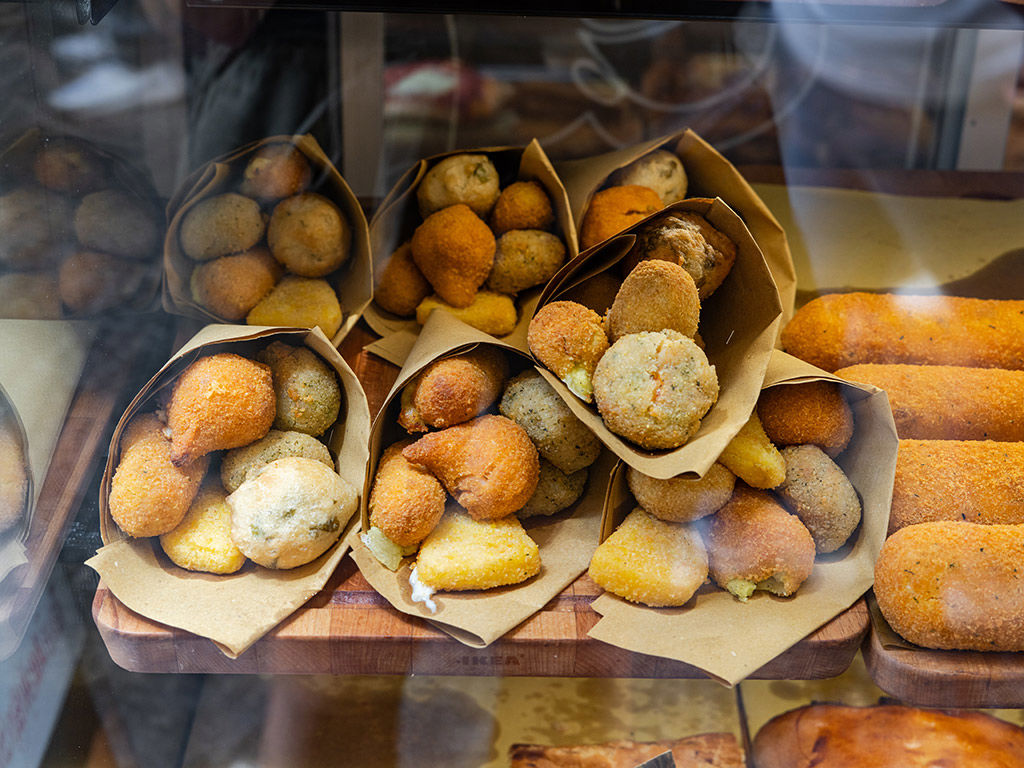
It's become rare in Europe to find a city where, while strolling, you can smell the flavors of all kinds of food.
After all, Naples is a city that lives its daily life outdoors, on every corner you can smell pizza, rag, fish, and every other traditional delicacy cooked at any time of the day.
And, indeed, in Naples you can eat at any time of the day! Losing yourself on a food tour is a way to live like the locals, who have an almost sacred connection with food.
So, follow us on this journey, where you'll visit streets, neighborhoods, and monuments while tasting the many delights—sweet or savory—that our tradition offers!
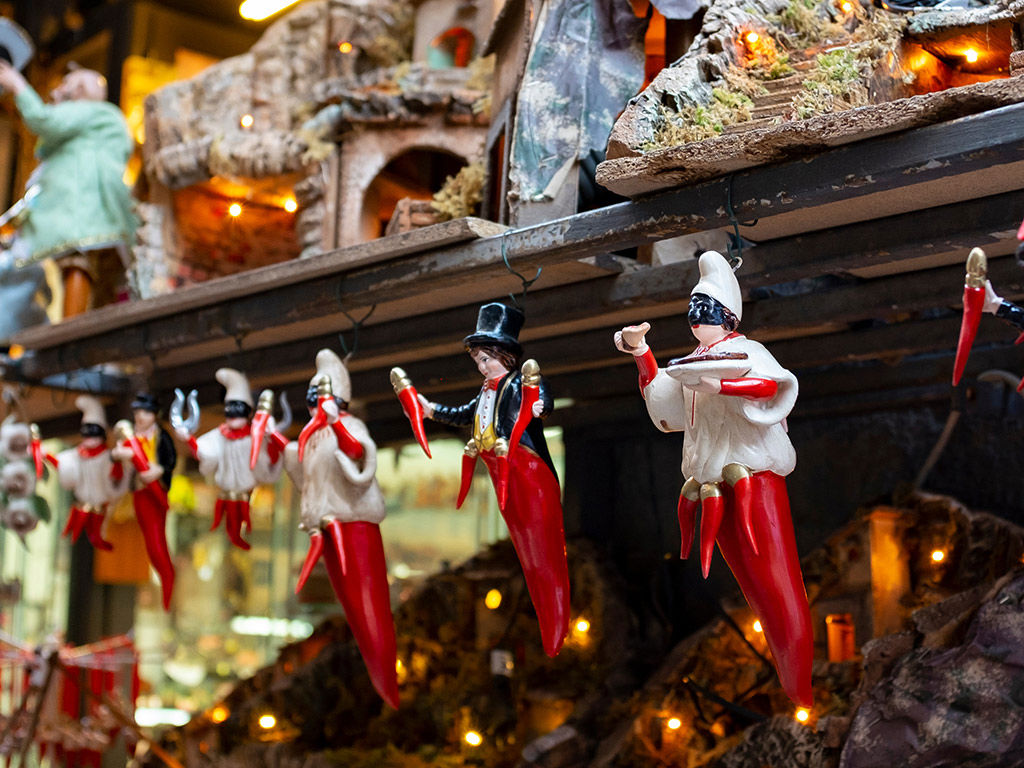
Since the late 1980s, Naples has been a favorite destination for street artists from all over the world. Strolling through the city center, a sort of improvised open-air contemporary museum, is the best way to discover the creativity and talent of those artists, who have given homage to Naples. This tour will let you lose yourself among the thousand colors and sounds of the narrow streets, perhaps stopping for a quick break in one of the traditional bars on Via Tribunali or Piazza San Domenico Maggiore.